
The Quiet Risk No One Is Planning For
What happens if organisations stop producing their future experts?

Flagship Essay — Capability Architecture Series
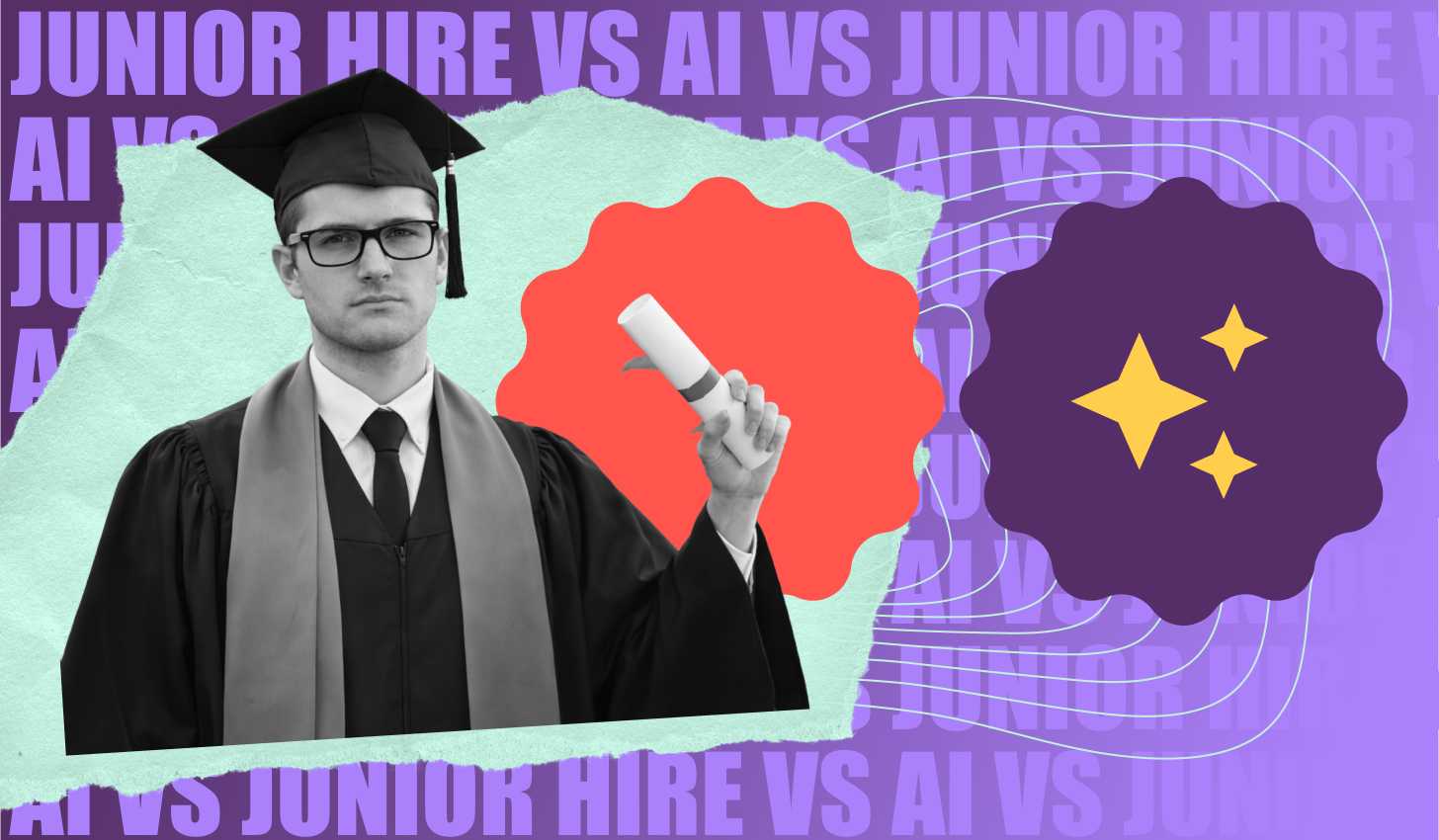
The productivity case for AI copilots is easy to see. A briefing note appears faster. A contract can be summarised in minutes. Research is pulled together before the meeting finishes. A senior person can ask for a comparison, a first draft and a tidy follow-up email without waiting for someone junior to assemble it all by hand.
That is useful, and in many cases overdue.
But there is a quieter question underneath the efficiency gain:
What if some of the work organisations are most eager to remove is also where people used to learn?
Not the glamorous work. The rough first draft. The overlong briefing note. The document review where someone slowly learned what mattered and which detail a senior colleague would ask about immediately.
AI is beginning to absorb more of that work.
The organisation may get the output faster while weakening the pathway that produced its future experts.
Which would be an impressive little productivity surprise.
When first-pass work disappears
Embedded workflow AI can now draft, summarise, compare, analyse and review material inside the tools people already use.
In some workflows, it produces the first pass, the messy pass and sometimes most of the finished result.
That matters because first-pass work has never been only about producing an artefact. It has also been part of the apprenticeship.
People learn to write a useful brief by first writing an unhelpful one. They learn to separate evidence from noise by working through too much of both. They learn what a weak recommendation looks like when someone asks them to defend it.
The feedback was not always delivered with the care now recommended in leadership programs. Many of us have the tracked changes to prove that.
But the repetition built pattern recognition, judgement and professional instinct.
Why the risk is easy to miss
Most organisations are trying to move faster, lower cost, improve consistency and make better use of experienced people. All reasonable objectives.
The productivity gain appears immediately. Work is completed faster, junior employees produce more polished material earlier, and senior employees spend less time correcting basic drafts.
The capability loss, if it occurs, appears later.
A junior employee reviewing an AI-generated analysis may become faster at improving the output. They may not develop the same understanding of how the evidence was gathered, which alternatives were discarded or why one trade-off mattered more than another.
We may end up asking people to check work they have never properly done themselves.
Then, several years later, the organisation wonders why the mid-career bench is thinner than expected, why senior specialists are still being pulled into routine decisions, and why succession plans appear stronger in the spreadsheet than they do in the room.
Where judgement is really built
This is not mainly an argument about preserving entry-level jobs. It is about how organisations continue to produce judgement.
Early-career roles have always done two things: helped produce today’s work and helped produce the people who will handle harder work tomorrow.
The first is easy to measure. The second becomes visible when it has gone missing.
That is why the productivity discussion can become too narrow. It asks how much faster a task can be completed, but not always what developmental value was hidden inside it.
The slow draft, the repeated review and the analysis rebuilt after a senior colleague asked one annoying but entirely correct question were not simply delays. They were how people learned to see the problem properly.
No one needs to preserve busywork out of nostalgia. There is plenty of low-value work that AI should remove.
But leaders need to distinguish between removing waste and removing practice.
Copying information between systems may teach very little. Reviewing customer cases, comparing patterns and explaining what changed may teach a great deal.
If both disappear without understanding the difference, the organisation may be borrowing capability from its own future.
Redesign the pathway, not just the task
Before compressing early-career work with AI, I would start with a practical question:
Where does judgement currently form?
Not where the learning framework says it forms. Where it happens in the real work.
Choose one role, function or career pathway and look at the tasks AI is beginning to absorb: drafting, analysis, research, document review, meeting preparation, case summaries or contract triage.
Then separate the work into two broad categories.
The first is genuine waste: repetitive activity with little learning value that can be removed without weakening the pathway.
The second may also be repetitive, but it builds pattern recognition, context, trade-off judgement or confidence in handling ambiguity.
That work does not need to remain unchanged. It needs to be redesigned.
A junior employee might prepare an initial view before using AI to improve it. They might explain what the AI missed or why they rejected part of its recommendation. Teams can use AI output as the start of a review conversation rather than the finished answer.
People may also need exposure to difficult, incomplete cases before they are asked to supervise polished machine output.
The goal is not to slow the organisation down for the romance of apprenticeship. It is to make sure efficiency does not remove the experiences people still need to become capable.
That is why AI adoption, workforce planning and learning design should not sit in entirely separate conversations. If one team is redesigning work while another is responsible for capability development, someone needs to connect the two.
The point is not to preserve every junior task. It is to understand which work is producing more than output.
Where a task helps someone interpret evidence, manage uncertainty, recognise risk or recover when the first answer is wrong, design another way for that learning to happen.
AI should help people reach capability faster. It should not allow organisations to skip the process through which capability is formed.
The quiet risk is not that employees become more productive.
It is that the organisation stops noticing where expertise used to be made.
Executive note for leaders
Before removing a task with AI, ask:
Is this task only producing output, or is it also producing judgement?
If it is mainly waste, automate it carefully.
If it also builds pattern recognition, context or professional instinct, redesign the development pathway before the task disappears.
Identify where first drafts, analysis and review are being compressed, then decide how future experts will still get the repetition, exposure and feedback they need.
Organisations do not simply inherit expertise.
They create the conditions in which it develops.
Subscribe
You can subscribe for free. Every edition is delivered directly to your inbox and published here on Substack.
If a piece raises a question, surfaces a pattern, or helps you think more clearly about a decision, I’d value the conversation.
Thanks for reading,
Stuart Gonsal MAICD
With occasional help from Springsteen, my Border Collie, who reminds me that clarity comes from movement 🐾.
Connect
LinkedIn – Follow for practical leadership on AI-era opportunity. ↗
Disclaimer
Everything shared in The Ripple Effect reflects my personal views and does not reflect those of my current or past employers, clients or partners. Any examples are illustrative, drawn from publicly known patterns or anonymised experience.