
What Springsteen Keeps Reminding Me About Leadership
Co-author and Head of Team Dynamics, Springsteen.

March, 2026
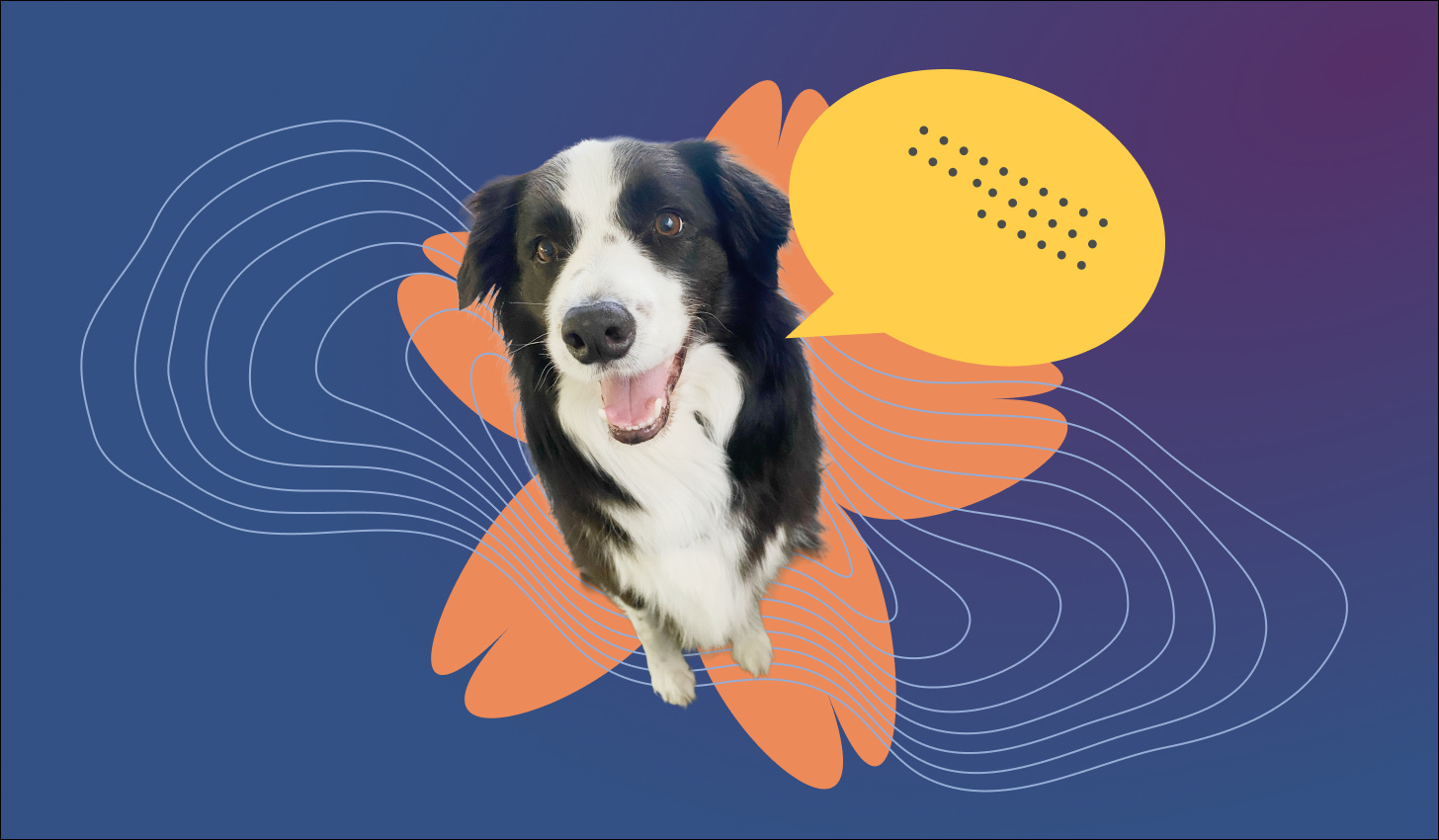
Spend enough time around a border collie and you realise something fairly quickly. They’re always watching you. Not in a demanding way. More in a quietly attentive way, as if they’re constantly checking in on what you might be about to do next.
My border collie Springsteen does this every morning. Before work, he’ll sit near the door, looking at me with that very particular collie expression that seems to say:
So… are we doing something interesting today?
Border collies are remarkable animals. But what makes them remarkable isn’t just intelligence. It’s the relationship they build with their person.
They read tone.
They notice small changes in movement.
They pick up signals you didn’t realise you were sending.
And over time, something interesting happens.
You start reading them too.
Without thinking about it much, you develop a kind of quiet coordination. A glance, a shift in posture, a change in pace, and both of you know what’s happening next.
It’s less like giving instructions and more like being a small two-person team that understands each other.
Recently, while studying Organizational Leadership at Harvard Business School Online, a theme kept surfacing: as leadership scales, it becomes less about authority and more about calibration.
People sometimes assume leadership at the senior level becomes more about command - clearer direction, stronger decisions, sharper strategy.
And those things absolutely matter.
But what colleagues consistently describe when they talk about the leaders they trust most are slightly different qualities: empathy, presence, curiosity and clarity of direction.
And perhaps most importantly - the ability to genuinely listen - to catch the signal before the noise.
In other words, leadership isn’t just about directing energy.
It’s about tuning into it.
Which brings me back to Springsteen.
Border collies don’t work well with constant instruction. In fact, if you try to over-control them, things tend to fall apart pretty quickly.
What works much better is awareness.
You pay attention.
They pay attention.
And somewhere in that space, a kind of rhythm forms where both of you move in the same direction.
The longer I work in organisations, the more I suspect the same thing is true there as well.
The strongest teams rarely form because someone is simply issuing orders from the front.
They form because people feel understood. Because trust builds. Because the leader creates enough space for the unspoken signals to be noticed.
Which means leadership, at its best, is a little less like command…
…and a little more like a really good border collie partnership.
I sometimes joke that I’m Springsteen’s GM.
But in reality, he’s a constant reminder that leadership often starts with awareness.
And on most mornings, watching how closely he reads the world around him, I’m reminded just how powerful paying attention can be. 🐾
Leadership, it turns out, often starts with paying attention.
Subscribe
You can subscribe for free. Every edition is delivered directly to your inbox and published here on Substack.
If a piece raises a question, surfaces a pattern, or helps you think more clearly about a decision, I’d value the conversation.
Thanks for reading,
Stuart Gonsal MAICD
With occasional help from Springsteen, my Border Collie, who reminds me that clarity comes from movement 🐾.
Connect
LinkedIn – Follow for practical leadership on AI-era opportunity. ↗
Disclaimer
Everything shared in The Ripple Effect reflects my personal views and does not reflect those of my current or past employers, clients or partners. Any examples are illustrative, drawn from publicly known patterns or anonymised experience.